




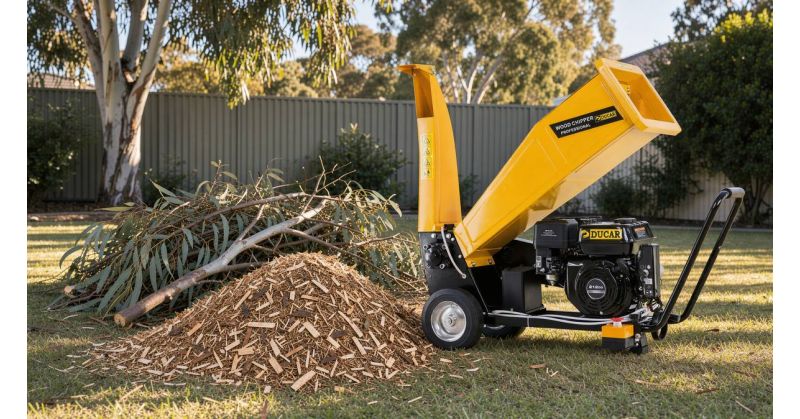
Hiring a small petrol wood chipper in Australia usually costs about $110–$180 a day, or around $500 a week, plus fuel. A 7HP home chipper costs about $650–$820 to buy, so if you'd hire one for more than 4 or 5 days over a few years, buying works out cheaper. Hiring is still the better choice for a one-off clean-up, or for branches thicker than about 100 mm. This guide shows the costs side by side and explains which size you need, what you can and can't put through a chipper, and what to do with the mulch afterwards.
How much does it cost to hire a wood chipper?
These ranges come from rates published by Australian hire companies in November 2026. Prices vary by city and supplier, so treat them as a guide and always ask what's included.
| Machine | Typical branch size | Day hire | Week hire |
|---|---|---|---|
| Small petrol mulcher / chipper shredder | Up to 60–75 mm | $80–$180 + fuel | About $500 + fuel |
| Towable chipper | 100–150 mm+ | About $90–$260 for the machine alone; $120–$550 with an operator | Quote |
Extra costs to ask about:
- Fuel: most hire machines go out full and must come back full, or you pay a refuelling charge.
- Delivery: usually about $50–$150 each way if you can't collect the machine yourself.
- Damage waiver and cleaning fees: a blade chipped by a hidden rock can cost you more than the hire.
- Your time: two trips to the hire yard, plus the pressure of finishing the job before the hire period runs out.
Hire vs buy: the 3-year cost comparison
This example compares hiring a 75 mm petrol chipper at about $150 a day with buying a 7HP chipper for about $750 and spending around $40 a year on oil, a spark plug and blade sharpening.
| How often you'd chip | Hire cost (3 years) | Own cost (3 years) | Better value |
|---|---|---|---|
| 1 day a year (one big prune) | ~$450 | ~$870 | Hire |
| 2 days a year (spring and autumn) | ~$900 | ~$870 | About even. Owning wins on convenience |
| 4 days a year (regular pruning) | ~$1,800 | ~$870 | Buy |
| Monthly (acreage, storm clean-ups) | $5,000+ | ~$870 | Buy, easily |
The numbers don't show how differently people use a chipper they own. With a hired machine you save branches up for weeks and then rush through a pile in one day. With your own you can chip for 20 minutes after each prune, while the wood is still green and easier to chip.
When hiring makes more sense
- It's a genuine one-off, such as clearing a block before you build or a single big clean-up after moving in.
- The branches are thicker than about 100 mm. Home chippers aren't built for whole trees. Hire a towable chipper or call an arborist instead.
- You have nowhere to store it. A 7HP chipper needs a space about the size of a lawn mower and then some, out of the rain.
When buying a wood chipper makes more sense
- You prune several times a year. Hedges, fruit trees, gums that drop limbs and palms all keep producing material.
- You're on a large or rural block, where storm damage and fallen branches come in all year.
- You're preparing for bushfire season. Fire services recommend clearing fallen branches and dead material from around your home. Chipping it on the spot is much quicker than carting it to the tip, and you can spread the mulch away from the house.
- Your green bin overflows, or you're paying tip fees for trailer loads of branches.
- You use a lot of mulch. Your own prunings are free mulch for every garden bed.
If that sounds like you, see our petrol wood chippers. They run from compact 7HP models for suburban yards up to a 15HP machine for acreage.
What size wood chipper do I need?
Size a chipper by the thickest branch you'll regularly feed, not the odd big limb. Running a chipper at its maximum all day wears blades and belts fast, so leave some headroom.
| Your garden | Typical branches | What to look for | Ducar model |
|---|---|---|---|
| Suburban yard: hedges, shrubs, fruit trees | Up to 50 mm | 7HP petrol, 60 mm capacity, large hopper for leafy material | Ducar 7HP Grinder (60 mm) |
| Bigger yard: gums, natives, regular storm drop | 50–70 mm | 7HP belt drive, 70–76 mm capacity, emergency stop | Ducar D70 (electric start) or Ducar 7HP (76 mm) |
| Rural or lifestyle block | 70–90 mm, high volume | 15HP 420cc, key start, larger fuel tank | Ducar 601C 15HP |
| Thicker limbs, rough ground | Up to 100 mm | Twin reversible blades, pneumatic wheels, adjustable chute | Ducar 70P |
Petrol or electric? Electric garden shredders are quiet and cheap, but most top out at about 40 mm and slow down quickly on hardwood. If you're chipping Australian natives or gum prunings, a petrol chipper is the more practical choice, and it doesn't need an extension lead.
Chipper, shredder or mulcher: what's the difference?
In Australian shops the three names are mostly used for the same machine, but technically:
- A chipper uses sharp blades to slice woody branches into chips. Branches go in through a side chute.
- A shredder uses hammers or flails to tear up soft green waste, leaves and small twigs. It feeds from a top hopper.
- A mulcher is the everyday word for either machine, named after what comes out.
Most home petrol machines, including every Ducar model, are combination chipper shredders: a side chute for branches and a hopper for leafy material, so one machine handles a whole garden clean-up.
What can you put through a wood chipper?
| Yes | With care | Never |
|---|---|---|
| Green branches within the rated size Gum and native prunings Hedge and fruit tree cuttings Dry leaves (through the hopper) | Palm fronds: cut them short and feed slowly, because the fibres wrap Vines and long grasses: cut short Very dry hardwood: blunts blades faster Wet, soggy leaves: can clog the hopper | Treated pine (contains chemicals you don't want in mulch) Painted or nailed timber Roots with soil or stones attached Plastic, wire, rope Anything over the rated diameter |
Tip: chip branches within a few days of pruning. Green wood cuts more cleanly and is gentler on the blades than wood that has dried out in the sun.
What to do with your wood chips
- Mulch garden beds. Spread 50–75 mm deep to hold moisture in summer and keep weeds down. Keep it a hand-width away from plant stems and tree trunks.
- Use it on top, don't dig it in. Fresh chips mixed into the soil can briefly tie up nitrogen. Left on the surface they break down slowly and feed the soil.
- Make paths. A thicker layer of chips makes a soft, cheap path between veggie beds.
- Add it to compost as the "brown" layer to balance grass clippings and food scraps.
- Line the chook pen or the run under a cubby or swing set.
- Keep it away from the house. Leave a clear gap between mulch and your walls, because mulch against the slab can attract termites and is a fire risk in bushfire areas.
Wood chipper safety: the non-negotiables
- Wear safety gear: safety glasses or goggles, earmuffs, snug gloves and enclosed shoes. Avoid loose sleeves, scarves and drawstrings.
- Feed the cut end first and let the machine pull the branch in. Let go once it grabs.
- Never reach into the chute or hopper. Push short pieces in with the next branch or a stick.
- Clear blockages with the engine off and the blades fully stopped, and pull the spark plug lead first.
- Stand to the side of the feed chute, keep the discharge pointed away from people, cars and windows, and keep kids and pets well back.
- Check your state's fire rules. Using petrol garden machinery outdoors can be restricted on Total Fire Ban days.
Looking after your own chipper
A home chipper needs only a little regular care. Change the engine oil after the first few hours of use and then at the intervals in the manual. Check the blade bolts before each use. Sharpen or flip reversible blades when the chipper starts tearing branches instead of cutting them. Brush out sap and debris after each job. You'll find the manual for each Ducar model on the wood chipper range page.
Ready to stop hiring?
The Ducar range is our own imported brand, from 60 mm 7HP chippers for suburban yards to the 15HP 601C for acreage, with spare blades and downloadable manuals.Compare all Ducar wood chippers →
Wood chipper hire FAQs
How much does it cost to hire a mulcher for a day?
A small petrol mulcher that takes branches up to about 75 mm usually costs about $110–$180 a day in Australia, plus fuel. Weekend and weekly rates are often better value, at around $500 a week.
Is it worth buying a wood chipper?
If you'd use it more than 4 or 5 days over a few years, yes. A 7HP chipper costs about the same as 4 to 6 days of hire, and you can use it whenever you prune instead of saving up a big pile.
Can I hire a mulcher from Bunnings?
Hire availability varies by store and region, and chippers aren't always in stock. Check with your local store or a dedicated hire company. If you'd hire more than a couple of times, compare the cost of owning one.
Can you put gum leaves through a mulcher?
Yes. Feed gum leaves and small twigs through the top hopper. Eucalyptus mulch is fine for most garden beds once it has weathered for a few weeks.
Can you chip palm fronds?
In small amounts. Palm fronds are very fibrous and can wrap around the rotor, so cut them into short lengths, feed them slowly and alternate with woody branches.
What size wood chipper do I need for a suburban block?
For most suburban gardens, a 7HP petrol chipper rated for 60–76 mm branches is plenty. Choose a 15HP model or a 100 mm machine only if you regularly deal with thicker limbs or acreage volumes.


Recent comments